
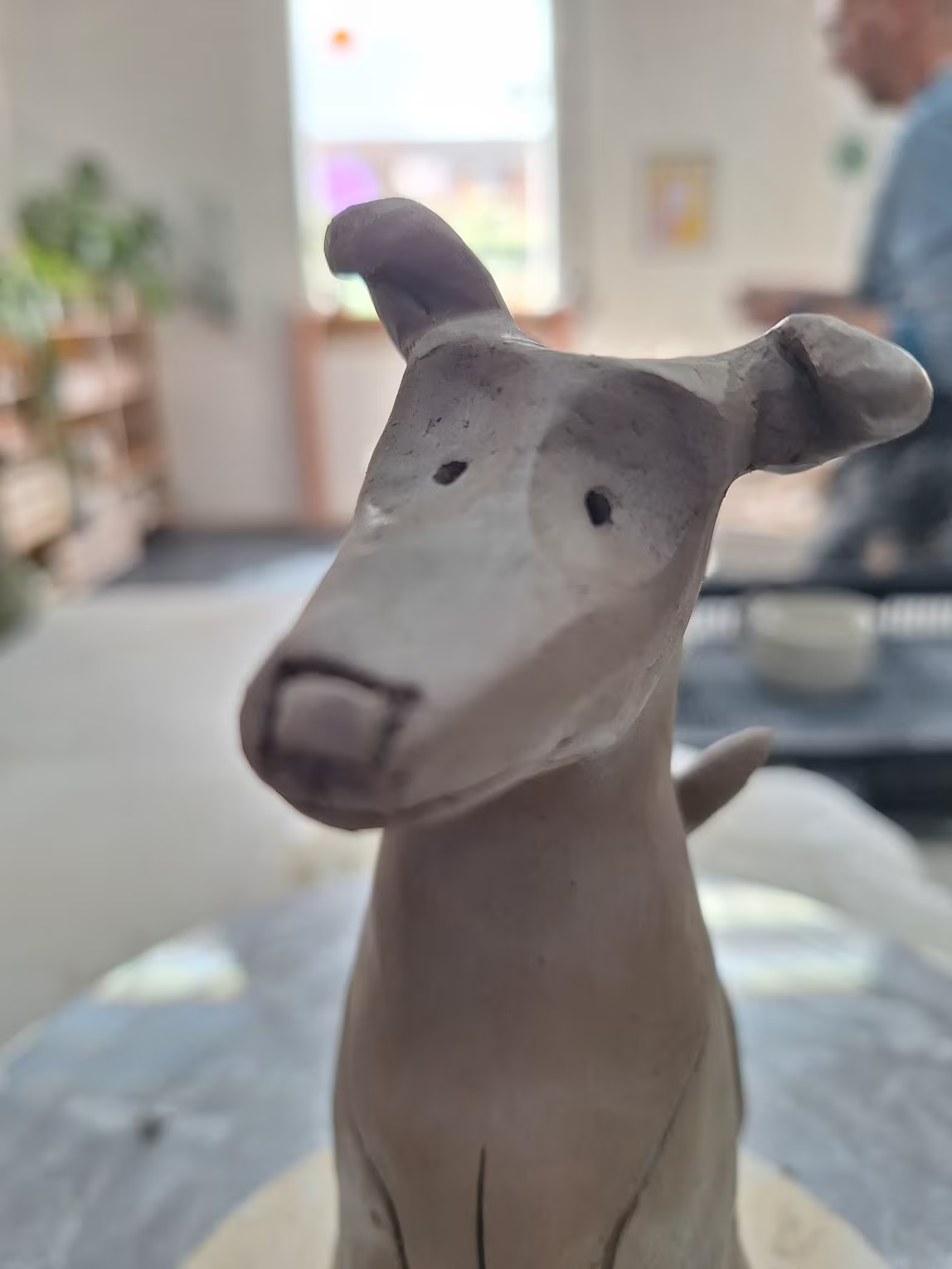
Put a lump of clay in my hand on a quiet afternoon and I’ll probably forget the rest of the day exists. It warms to your skin, takes the print of your thumb, and politely refuses to be rushed.
The wheel is wonderful, no argument. But almost everything I make at Henroo is built another way, with my hands and a lot of patience. So here’s a little love letter to handbuilding.
Three ways to grow a pot from a lump of clay
Handbuilding isn’t really one technique. It’s a little family of them, and I often use more than one in the same make.
Pinch. Press your thumbs into a ball of clay, then turn and squeeze until the walls thin out. It’s the one I reach for when I’m making small, round things with personality. The monsters are pinch pots underneath all the eyes and ears.
Coil. Roll the clay into long ropes and stack them, smoothing each one into the next. Coiling lets you build taller and curvier than a pinch will allow.
Slab. Roll the clay flat, cut shapes out of it like pastry, and join them up. That’s how you get crisp edges and flat sides.
You can’t bully clay into the shape you want. It’ll let you know when it’s ready and when it isn’t.
Why slow, and why by hand
A handbuilt piece often takes days. Build a bit, wait for it to firm up, build a bit more, wait again. Then it has to dry right out before it goes anywhere near the kiln, and it’s fired twice before it’s finished.
I love that pace. Pottery is meant to be slow and gentle in so many ways. Every make carries the marks of the hands that made it: a fingerprint here, a wobble there that turns out to be exactly the right wobble.
My first ever mug is wonky, totally imperfect in every way, and I love it! My first handbuilt animal was a cat. I wasn’t expecting him to survive the bisque fire, but he did, and he’s sat on my kitchen window sill making me smile ever since.
It also means no two ever come out quite the same, which for me is the whole point.
If you’d like to see where it all ends up, the shop has the latest makes, and Instagram is where I share the wonky in-progress bits. Have you ever had a go with clay?


